The Domestication Debate
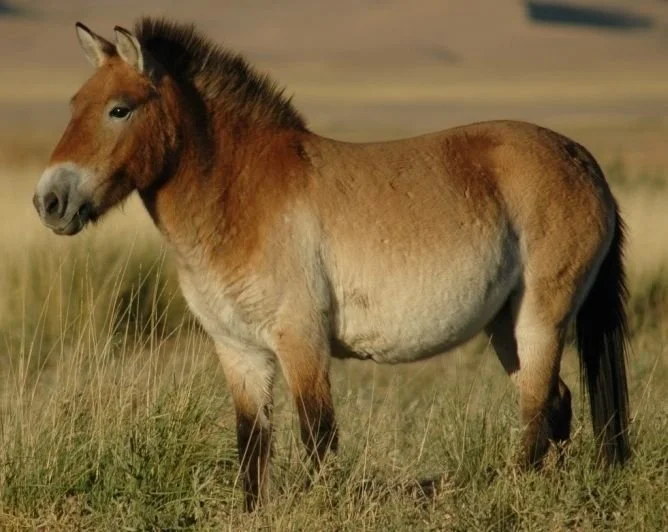
Przewalski Horse
Tennis anyone? Scientific debates, whether over nutrition, or drug research, advanced physics, or evolution, often resemble tennis volleys between Wimbledon champions. We follow the ball back and forth as the players return their opponents' arguments with their own. So it is with the origin of the domestic horse. The players here are two teams of scholars, on the one side #PabloLibrado (Librado, Orlando, Taylor et al.) and on the other side, #DavidAnthony (Anthony, Trautman, Heyd). Librado holds that the domesticate horse originated on the Pontic steppes (north of the Black Sea), and humans first rode them around 2200 BC. This argument relies heavily on genetic research by #LudovicOrlando's lab work in Toulouse with thousands of horse remains across Eurasia. I liken Antony to a defending champion, because of his influential book "The Horse, the Wheel, and Language" from 2007. His side relies heavily on archeological evidence to argue that people rode horses in eastern Europe one thousand years earlier. In his book Antony argued that humans first domesticated horses at Botai, in Kazakhstan, during the fourth millennium BCE (i.e., 3000), based on archeological and zoological evidence for controlled breeding, milking, and equine dental damage suggesting the use of bits. This hypothesis gained much support for a decade. Why does the date of domestication matter? Many readers appreciated "The Horse, the Wheel, and Language" because of the convincing evidence that the domestication of the horse coincided with the movement of the so-called Yamnaya culture from the Pontic Steppes into Europe, where they left a strong genetic imprint, especially in Northern Europe, and from whose language most of the European tongues descend. This has given rise, in the popular imagination, to the idea of chariot-driving warriors with helmets out of "Die Walkurie" screaming into Europe, butchering the indigenous men and ravishing their widows and orphans. This image-- which I find nightmarish-- is one reason I have always been secretly hoping that Anthony would lose the return volley.
Librado's counter argument has been that the Yamnaya culture moved into Europe before they domesticated horses and before chariot riding warriors emerged. The Yamnaya would only have had oxen pulling their carts as they migrated westward. Their triumph over the indigenous Europeans would have been slower and more peaceful. Perhaps their meat and milk eating diet preserved them from an epidemic, or made them more competitive as mates for the local women. Vegetarians will not like this idea either, I reckon, but this is my preferred hypothesis, and the one I relied on in Raiders, Rulers, and Traders. From a historical narrative sequence, too, It seems to me odd that people would have domesticated horses in 3,000 BCE and that fact would not have registered in the histories of the settled civilizations until 1800 BCE, when the first chariot-driving mercenaries from the steppes appear among the Hittites and Egyptians. What where they doing for 1,000 years? Key to this counter argument is evidence that the horses are Botai are not the ancestors of today's horses. Orlando's extensive genetic sampling demonstrated this, and found something rather odd. The Botai horses are the ancestors of the Przewalski horses. Botai, in effect, was an unsuccessful attempt to tame horses. Eventually these horses returned to the wild, and begat the unrideable Przewalskis. So these horses are not really wild, but feral. Once it became clear that the Botai were not the ancestors of today's horses, the idea that the Yamnaya rode them into Europe appeared questionable.
Now Antony returns the ball with a new article in Science Advances-- Anthony et al., Sci. Adv. 12, eady7336 (2026) 13 May 2026 -- (the returns take about 3 years to prepare but still the sensation is dizzying). Based on significant archaeological work as well as genetic analsysis. On the archeological side they cite the frequency of horse remains in human burials, along with other domesticated animals, the larger size of horses in the millennium 3,000-2,000 BCE, and the appearance of the horse-headed scepters as symbols of rule (cf. Nestor's scepter in the Iliad). On the genetic side they mention the existence of certain phenotypes like dappling occurring around 3000 BCE, which is commonly associated with domestic horses, and the likelihood that the genes enabling riding (specifically, GSDMC and ZFPM1. ) may have become common in equine populations as early as 3000 BCE. Revised analysis using Librado's data shows some evidence of the right kind of horses being availble to the Yamnaya peoples. But how do they explain the slow impact of horsemanship on the settled peoples? They claim that it was not riding that changed history but the invention of the composite bow, which turned relatively peaceful horse herders into dangerous predators. The bow appears around 1500 BCE and right after that we see the Cimmerians and then the Scythians blazing a trail of destruction across the Middle East. But the first written histories of horses preceded that of the mounted archers. Charioteering made horses important to the early states in the Middle East, and later China, between 1800 and 1500 BCE. This point does not weaken Antony's argument directly. But if the Yamnaya people used horsepower to invade Europe, why don't we see them in the Middle East? And if they were not chariot riding, blond beasts, then it begs the question as to their advantage with horses. Katherine Kanne at the University of Exeter argues that the earliest horse breeders entered Europe peacefully. There's no sign of warfare of violence in these first settlements. So even if they herded horses as livestock, they did not ride them in the way that the later, "Librado" horses were ridden. Extensive ridining, and the horses willingness to pull a war chariot, must have developed later. So for me the match is not over yet. Advantage to Anthony who can demonstrate that horses were widespread in early steppe settlements in Europe around 3000. Waiting for Librado to respond that there's no evidence of the kind of riding that helped horsemen make history. To return to my tennis analogy, I am not a tennis player, but only a sportswriter. Both side are playing a long game